Best Gutters Company & Strong Quality Product Support

Call Us Today!
Call Us Today!

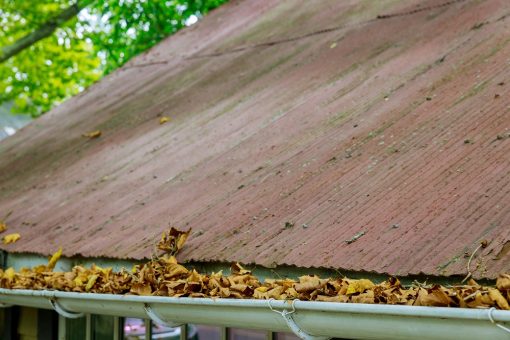
Prepping gutters before hurricane season in New Orleans means clearing every run and outlet, confirming the hangers are tight, and checking that the system can carry the volume a Gulf Coast storm delivers. Start in late spring, ahead of the June 1 season opening, and book anything that needs a crew before August. A clogged, loose gutter behaves like a sail and a holding tank at the same time.
At TurnKey Gutters, we spend late spring getting New Orleans gutter systems ready for a season that arrives on schedule every year. Storm damage is rarely random, and the runs that fail are usually the ones that were already loose, already clogged, or already undersized.
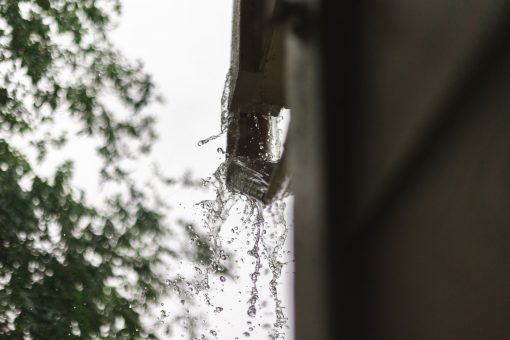
Wind gets the attention, but water does most of the damage to a gutter system. A full trough is heavy, a blocked outlet keeps an entire run from draining, and both conditions set in well before the wind reaches its peak.
You can handle a good share of the work yourself if you start early enough. Contact us today to schedule a pre-season gutter check before the calendar gets tight.
Gutters fail in storms for three reasons, and only one of them is wind. Weight and capacity account for most of what we are called out to look at once the season opens.
Weight comes first, and a clean gutter is not exempt from it. Water weighs about 8.3 pounds per gallon, so a long trough standing full puts a load on hangers spaced for ordinary rainfall that they were never sized to carry.
Capacity is the second reason. A 6-inch trough carries roughly 40 percent more water than the common 5-inch, and that difference decides the outcome when rain arrives faster than the system can drain, which is why custom gutter sizing matters more here than in a mild climate.
Wind is the third, and it mostly finishes what the first two started. A run already sagging under water has a gap behind it where wind can get under, and that is the run that peels.
Late spring, before the season opens. According to NOAA’s National Hurricane Center, the Atlantic hurricane season runs June 1 through November 30, so anything that needs scheduling should be handled in April or May.
The peak matters as much as the start date. NOAA puts the statistical peak of the Atlantic season around September 10, with most activity falling between mid-August and mid-October, which means the system has to be ready long before the busiest stretch.
Homeowner tasks can wait until May without much risk. Anything involving a crew cannot, because pre-season demand compresses into a few weeks and new gutter installation is measured in days of work, not hours.
Most of the prep is clearing and looking, and none of it requires tools you do not already own. Work one elevation at a time so nothing gets skipped.
A crew handles the work that needs ladders, fasteners, and measurements. The goal is the same as yours: a system that drains fast and stays attached.
Hangers are the whole attachment story, and the number of them matters more than the brand. Industry practice puts standard hidden hangers at roughly 24 inches apart, and tightens that toward 16 to 18 inches where wind loading is a regular concern.
We reset anything loose into solid fascia rather than back into the same worn hole. On older homes, a fair share of the work is finding the fasteners that have been quietly backing out for years.
Spacing is industry practice rather than a published code figure, since the residential code enforced statewide in Louisiana sets no hanger spacing for gutters. Tightening it is a judgment call a crew makes from the exposure of the elevation.
An outlet moves less water than the trough feeding it, which makes it the first place a system backs up. Clearing it from above and flushing from below is the only way to know it is actually open through its full length.
Elbows are where debris parks, since every direction change slows water and catches what it is carrying. We take them apart when a flush test comes back weak instead of assuming the run is clear.
Outlet size also caps what clearing can achieve. A nominal 3-by-4-inch outlet is roughly double the cross-section of a 2-by-3-inch, so the smaller one backs up sooner however clean it is.
A gutter is supposed to fall gently toward its outlet, and a run that has lost that fall holds standing water in the low spot. Standing water is the extra weight that turns wind into a problem.
Resetting pitch is usually a matter of adjusting hanger heights across the run rather than replacing anything. It is quick work in May and much harder to schedule in September.
A dip you can see from the ground is already past the point where water sits. The subtler loss of fall is what needs a level, and that is what a crew catches.
Capacity is the one prep item a homeowner cannot check by looking. It comes from roof area, pitch, and how many planes feed each run, not from the length of gutter on the wall.
A capacity review starts from the roof rather than the gutter. We measure the drainage area each run actually serves, then check the trough and outlet sizes against it.
When the trough or the outlets are undersized for the roof they serve, clearing and tightening only buy time. That is when gutter replacement sized to the actual roof area is the honest recommendation rather than another season of patching.
Once a storm is in the forecast cone, the work shifts from improving the gutters to reducing what can reach them. Keep it to things you can finish safely and well before the weather turns.
| When | What to Do |
|---|---|
| About a week out | Clear all runs and flush every downspout, so the system starts the storm empty |
| 48 hours out | Reattach any loose extension and aim each one away from the walls and walkways |
| 24 hours out | Move planters, furniture, and bins away from downspout discharge points |
| The morning of | Walk the perimeter from the ground and pick up anything loose that could blow into a run |
| As the first bands arrive | Stay off ladders and off the roof, and note from indoors where water is overshooting |
That last row is the one people skip, and it matters more than it looks. Where water overshoots during the storm tells you exactly which run is undersized or holding water, and you can see it from a window.
A gutter system either carries what the season throws at it or hands the overflow to your fascia, your walls, and the soil at your foundation. The difference is usually decided in May, not during the storm.
At TurnKey Gutters, we clear, reset, and size systems ahead of the season so your gutters are not the weak point when a storm parks over the city. Call us today to book a pre-season gutter assessment for your home.
The Atlantic hurricane season runs June 1 through November 30, according to NOAA’s National Hurricane Center, and Louisiana sits inside that window for its full length. The statistical peak falls around September 10, with most activity between mid-August and mid-October, so prep should be finished well before August.
Yes. A gutter that starts a storm already holding debris cannot move the volume a tropical system delivers, so water backs up over the front edge and down the wall. Clearing the runs and flushing each downspout is the single highest-value thing you can do before a storm.
No, and it is not worth attempting. Taking gutters down leaves the fascia exposed and dumps the entire roof’s runoff at the foundation, which trades a manageable risk for a worse one. A cleared, properly secured system protects the house far better than no system at all.
Hanger count and fastener grip decide this. Industry practice spaces standard hidden hangers at roughly 24 inches, tightening toward 16 to 18 inches where wind loading is a regular concern, and every fastener needs to land in solid fascia rather than a worn hole.
A 6-inch trough paired with 3-by-4-inch downspouts handles storm rainfall far better than the common 5-inch and 2-by-3-inch combination. A 6-inch gutter carries roughly 40 percent more water than a 5-inch, and the larger downspout roughly doubles the outlet’s cross-section so it stops being the bottleneck.
During a storm the deciding factor is how much debris is already on the roof, not the guard itself. A clean guarded system keeps large debris out of the trough, while a guard buried under leaf mat before the storm restricts flow the same way a clogged gutter does.
Twice a year suits most homes here, with one clearing in late spring before the season and one after the fall leaf drop. Homes with heavy overhanging canopy need a third pass, since a compacted debris mat can form in a single wet month.
That depends on capacity rather than condition, and capacity comes from roof area, pitch, and the number of outlets serving each run. A system sized for ordinary rainfall will overflow in a tropical downpour even when it is perfectly clean, which is why a pre-season capacity check is worth more than another cleaning.

 Turnkey Gutters
  Aug 20, 2026