
Best Gutters Company & Strong Quality Product Support

Call Us Today!
Call Us Today!

Stop leaks and overflow in their tracks with a better fascia gutter design. We specialize in seamless installations with adequate slope, quality materials, and appropriately sized downspouts to channel water like a pro.
In rain-soaked New Orleans, smart design is a must to guard your home’s foundation and fascia boards. We’ll detail what makes for good fascia gutters to protect your home. Also, don’t hesitate to contact us at TurnKey Gutters for assistance with your fascia.

Gutter overflow is a common issue that can lead to significant property damage if not addressed promptly. Knowing what causes it allows us to design better fascia gutter systems shielding homes.
Leaves, twigs, dirt, and other debris are the main culprits of clogged gutters. When gutters become blocked, water can’t flow through them properly and ends up running over the edges.
Over time, this buildup can cause gutters to sag under the extra weight, making the problem worse. To prevent this, gutters should be cleaned out periodically, ideally twice a year.
Installing gutter guards, such as perforated aluminum or mesh designs, can help limit debris from entering and reduce the amount of maintenance needed.
Gutters need to be installed with a slight slope – roughly ⅛” to ¼” for every 10 feet – to make sure water drains toward the downspouts. A wrong slope can cause pooling water, which leads to overflow near edges or downspouts.
This can be a real problem in heavy rains — say two inches in an hour. Pro modifications can fix wrong slopes so water drains properly and minimize damage.
Typical 5″ gutters can find it hard to manage rain on bigger roofs or in wet areas. 4 reasons your gutters are overflowing | Best 6″ gutters upsized from 5″ gutters 40% more capacity 6-liner gutter protection. Proper downspout placement — 1 downspout for every 20–40 feet of gutter — is a must.
Bad installation, like crooked gutters or loose brackets, nullifies the system. Improper alignment can cause water to spill out instead of flow into downspouts, and loose brackets result in sagging. Employing experienced professionals provides safe attachment, appropriate pitch, and durability.
Broken fascia boards or roofing can loosen gutters and cause them to pull away or sag under the weight. Regular inspections catch such vulnerabilities early. Timely fascia repairs keep your gutters where they belong and the water out of your home.
From the ground up, our fascia gutters feature a factory seam-free design that reduces leaks and prolongs life. Instead of being left hanging under the roof, they connect directly to the fascia board, minimizing space for water to wiggle its way into your home. Fascia gutters are a proactive personal design and management solution that, beyond preventing leaks and overflow, protects your foundation and landscaping from water damage.
These gutters are especially great in regions where there’s heavy rainfall, because their sleek shape and generous capacity allow them to manage a large quantity of water with minimal maintenance and maximum durability. Designed to be functional and visually appealing, your fascia gutters can blend with your home’s architectural style.
Proper sizing of your fascia gutters is essential for effectiveness. Larger gutters are vital in heavy-rain areas to prevent water damage. For instance, a 150 mm gutter is preferable to a 125 mm one in such regions. Consulting with us will help determine the right sizes based on your roof’s pitch, area, and local weather.
Material durability, weight, maintenance needs, and corrosion resistance vary:
For humid climates, seamless aluminum gutters are our top choice for longevity and low maintenance.
The pitch or slope of a gutter is crucial. A low pitch can cause water pooling and overflow. The ideal slope is about 6 mm per meter to ensure proper flow to downspouts. If you notice standing water, have an expert adjust the pitch.
Downspouts are vital for directing water away from your house. Improper placement or insufficient downspouts can lead to overflow and foundation issues. Extending downspouts at least 1 meter from the house helps prevent erosion. Consider adding splash blocks or underground drains for better water management during storms.
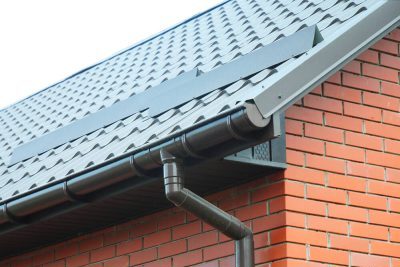
Fascia boards must be resistant to moisture, pests, and the weather. Although normally treated wood is used, composites like PVC or fiber cement are very low-maintenance, long-lasting options, and coatings for the moisture can increase their life.
Weakened fascia ultimately results in sagging gutters and pooling of water near the building. Carry out regular inspection and maintenance works to catch problems in good time.
Correct installation of gutters and fascias is important. Leaking gutters cause damage to the fascia and stress out the entire roof system.
One strong bracket holds everything in alignment, irrespective of rainy storms. Professional installation considers many factors, such as roof pitch, gutter size, and bracket placement, so that you can enjoy a durable system.
Drip edges are important to direct the water away from the fascia boards. It is installed between the roof and gutter and serves to keep water from going behind the gutter and rotting the fascia. Without drip edges, fascia boards can rot.
Every home should have a gutter that is really good and does not let water ooze out or tap leaks inside the house. With a well-planned fascia system, rainwater will be well taken care of.
If you happen to encounter overflow or leakage problems, we can help. Given the number of years working in the harsh climate of New Orleans, we now have solutions specific to your premises. Contact us at TurnKey Gutters to make your gutters storm-ready.
 Turnkey Gutters
  Sep 25, 2025


