Best Gutters Company & Strong Quality Product Support

Call Us Today!
Call Us Today!

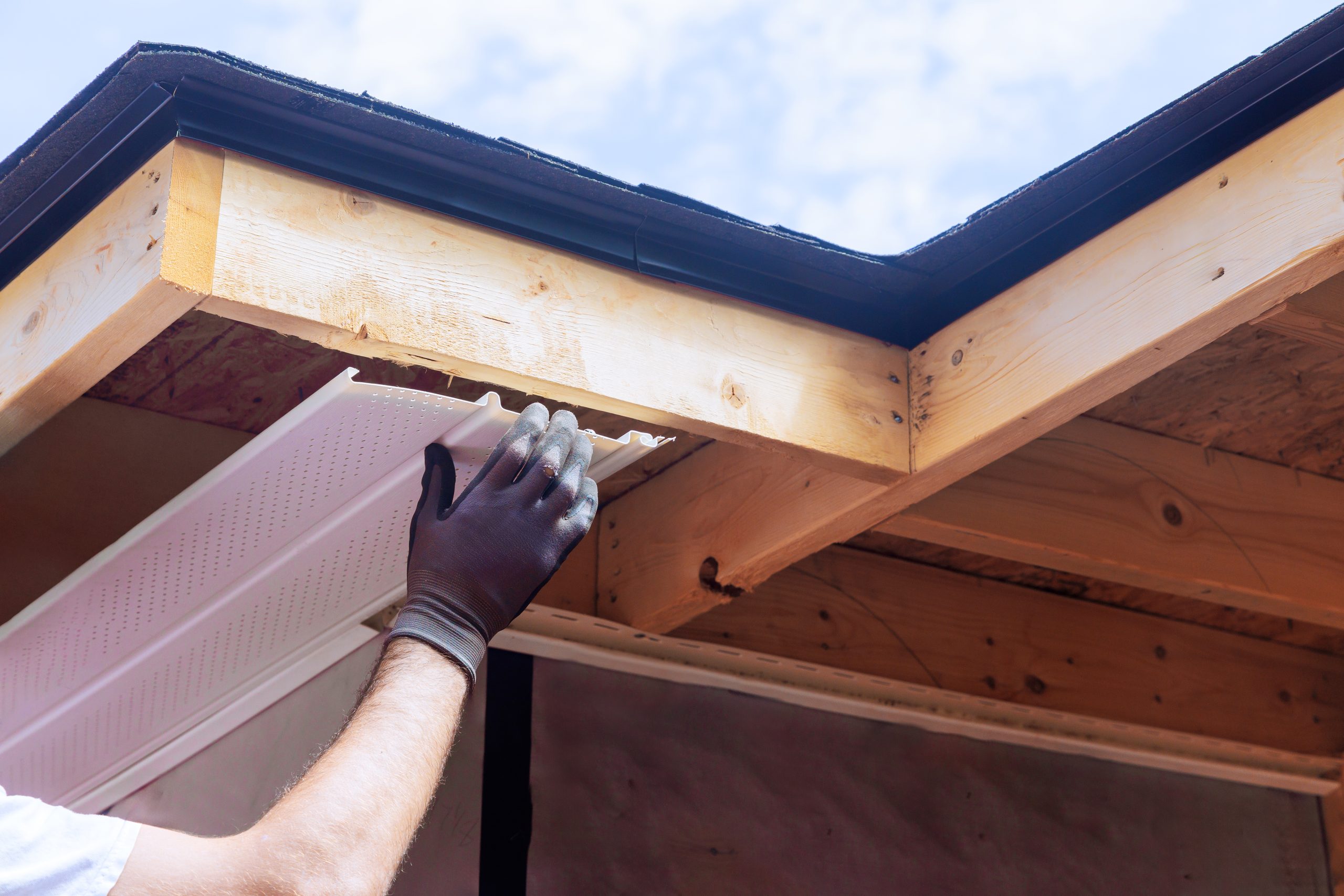
New gutter installation cost in New Orleans is set by 5 things: how many linear feet your roofline needs, the trough size and profile, how many downspouts and outlets it takes to move the water, how complicated the roofline is to work on, and the labor the site actually demands. Material choice matters less than most homeowners expect. National cost guides put installed work in a wide per-foot range, but only a measured roofline produces a real number.
At TurnKey Gutters, we quote gutter work off a measured roofline rather than a square-footage guess, and homeowners are usually surprised by which line items move the total. The material everyone asks about first is rarely the biggest factor.
Cost guides hand you a per-foot range, and that range is wide for a reason. Two houses on the same street can land far apart on a quote because of corners, height, and the number of outlets the roof requires.
Knowing which factors move the number puts you in a much better position when you compare quotes. Contact us today to get a measured estimate instead of a ballpark.
Five things, and they stack. Here they are in roughly the order they affect the total.
Footage is the base, and the one number a contractor can establish before anything else. It is measured along every roof edge that will carry a gutter, not around the house at ground level, which is why a homeowner’s own estimate usually comes in low.
Footage alone is a weak predictor, though. A simple rectangular roofline and a cut-up one can measure the same and price very differently, because a straight run is fast and a run broken into 6 segments is not. That is what a per-foot number from a national guide cannot see, and why a real gutter installation quote starts with a walk-around.
Size is a capacity decision before it is a cost decision. A 6-inch trough carries roughly 40 percent more water than the common 5-inch, and on a roof that sheds a lot of water fast, that difference is the whole point.
The larger profile costs more per foot in coil stock and takes heavier hangers. Half-round and specialty profiles add fabrication time on top of that. None of it is a style upgrade in a climate like ours, which is worth knowing before you compare a 5-inch quote to a 6-inch one and call the cheaper one better value.
Downspouts are the line item most people forget to ask about. Industry sizing guidance puts one downspout per roughly 20 to 40 linear feet of gutter, or one per roughly 600 to 800 square feet of roof drainage area, and Gulf Coast rainfall pushes toward the tighter end of both.
Outlet size matters as much as count. A 3-by-4-inch downspout is roughly double the cross-section of a 2-by-3-inch, so the larger one stops being the bottleneck in the system. Each added downspout brings its own elbows, straps, and discharge run, so a quote with more of them is often the more honest one.
Complexity is where two quotes on the same house diverge most. Every corner is a miter that has to be cut, sealed, and fitted, every valley concentrates water that changes where an outlet has to land, and every roof plane added to a run is one more thing to measure around.
Dormers, turrets, and stepped rooflines are common on older homes here, and they turn a half-day job into a full one. This is the factor a phone quote cannot account for, and the reason a contractor who gives you a firm number without seeing the house is guessing.
Labor is a large share of an installed price, often close to half, and almost none of it is the part homeowners picture. It is access, removal, and what gets found once the old gutter comes off.
A second story changes the equipment, the setup time, and the number of people needed. Ladder work over a flat driveway and ladder work over a sloped side yard with a fence are not the same job.
Tight side yards are the quiet cost on New Orleans lots. When there is no room to set up, material has to be carried farther and staged differently, and that time lands in the estimate whether or not anyone itemizes it. Access is also why one roofline finishes in a day while an identical one on a tighter lot can spill into a second.
Removing an old system takes real time, especially where it was fastened with spikes rather than hidden hangers. Old aluminum also has to go somewhere, and disposal is a line item even when it is folded into a single number. Spike-fastened runs are the slowest to strip, since every fastener has to come out without tearing the fascia the new hangers will need.
Replacement work therefore prices above new construction on an identical roofline. If you are comparing a quote for a house that has never had gutters against one for a tear-off, you are not comparing the same job.
Hangers need solid wood to bite into, and fascia that has been carrying a leaking gutter for years often cannot provide it. That is found when the old system comes off, not before. Soft fascia has to be made sound before anything gets hung, which adds material and time to a job quoted without it.
A good contractor flags it as a possibility upfront rather than discovering it and presenting a bigger invoice later. Ask how fascia work is handled before you sign anything, because the answer tells you a lot about how the rest of the job will be run.
Material is where most of the questions land, and it is rarely what decides the total. Seamless aluminum is the common residential choice and sits at the low end of the range, galvanized steel sits above it, and copper well above both.
Here is where the intuition breaks down: moving from aluminum to steel changes the per-foot material cost, but adding 4 corners and a second downspout can change the total more. Cost guides agree on that ordering even where their exact figures differ, which tells you the ordering is real and the precision is not.
Seamless runs are formed on site from coil stock, so run length and corner count drive fabrication time directly. That is why custom gutter work on a complicated roofline can cost more in aluminum than a simple roofline in a premium metal.
A low quote is not automatically a bad one, but it is always worth understanding. Most of the time the gap comes from scope rather than margin.
Look at what the cheap quote left out. Fewer downspouts, a 5-inch trough where the roof needs 6, spikes instead of hidden hangers, no tear-off allowance, and no mention of fascia. Each is a real reduction in what you are buying, and each shows up later as overflow, sagging, or a gutter replacement sooner than you planned.
The comparison that works is item by item rather than total to total. Ask each contractor for the footage they measured, the profile size, the downspout count, and the hanger type, and the quotes usually stop looking so different.
Gutter pricing is not mysterious; it is just specific to your roofline. Footage sets the floor, complexity and downspout count move it most, and material moves it less than the brochures suggest.
At TurnKey Gutters, we measure the roofline, count the outlets your roof actually needs, and give you a figure with the scope written next to it. Call us today to get your gutter installation measured and quoted.
National cost guides put installed gutter work in a wide per-foot range, with seamless aluminum at the low end and copper well above it. That range is a starting point rather than an estimate, because footage, corner count, downspout count, and access can move a real quote well outside it.
Most of the gap is scope, not margin. Quotes differ on the footage measured, the trough size, how many downspouts are included, the hanger type, and whether tear-off and disposal are covered, so two numbers for the same house often describe two different jobs.
Repair costs less in the moment and is the right call when the system is correctly sized and the problem is localized. Replacement is the better value when the trough or the outlets are undersized for the roof, because no amount of patching fixes a capacity problem.
Yes, and the difference is labor rather than material. Working at height calls for different equipment, a longer setup, and enough hands to do it safely, and a tight side yard on a two-story home adds staging time on top of that.
Seamless runs remove the joints that are the most common leak point in a sectional system, which is why they are the standard residential choice. They are formed on site from coil stock, so a long straight run is efficient while a heavily cut-up roofline adds fabrication time and cost.
A complete quote names the linear footage measured, the trough profile and size, the downspout count and outlet size, the hanger type and spacing, and how tear-off and disposal are handled. Anything missing from that list is a scope question worth asking before you compare totals.
Gutters protect value more than they add it, since their job is preventing fascia, siding, and foundation damage that is expensive to reverse. A correctly sized system also reads as maintained rather than deferred, which matters when a buyer’s inspector walks the perimeter.
Most single-story homes with a straightforward roofline are finished in a day, including tear-off. Two-story work, heavily segmented rooflines, and any fascia repair found during removal can push the job into a second day. Access on a tight lot adds staging time as well.
 Turnkey Gutters
  Aug 24, 2026